A Guide to Our Speciality Tea Range
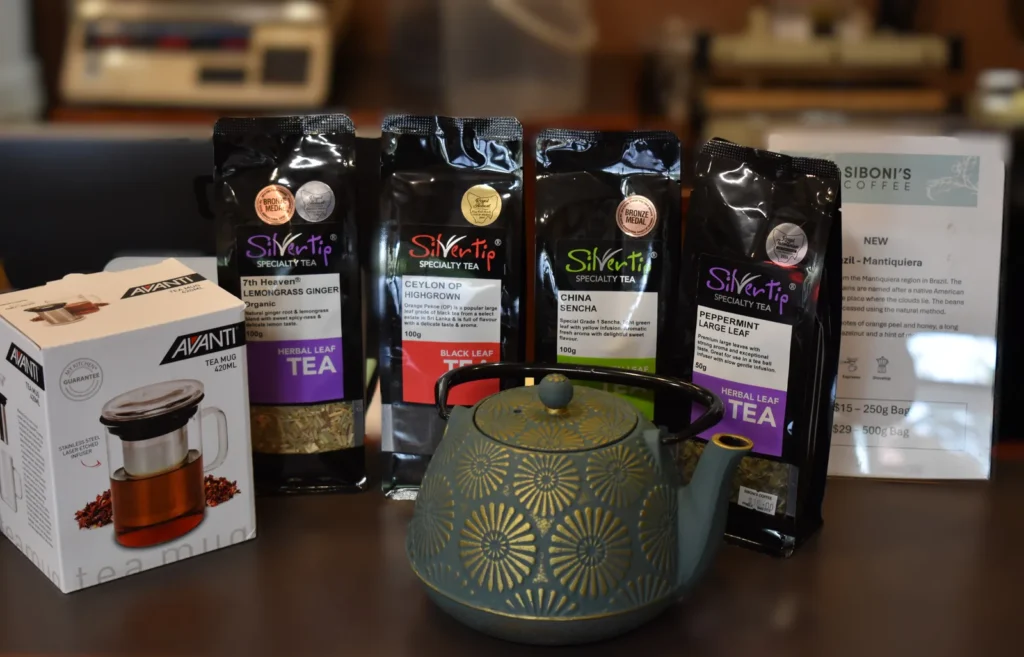
Coffee’s our roots, but tea’s earned its own space on the shelf — ten varieties, all sustainably sourced and packed in Australia, covering black, green, spiced and herbal, for whenever you want something different from your usual cup.
Black tea
Ceylon Orange Pekoe Highgrown comes from the Nayapane Estate in Sri Lanka — a long, wiry leaf with a delicate taste and full flavour, best brewed 3–5 minutes at 95–100°C. English Breakfast is the reliable everyday cup, full-bodied and balanced, built from single-origin Sri Lankan and Assam leaf and traditionally taken with milk — it’s our best-selling tea for a reason. Russian Caravan has a distinctive smoky character, historically named for the tea caravans that once carried it overland from China, blended with fine China Keemun tea for a golden-tip quality. French Earl Grey adds a floral, bergamot-led twist on the classic, layered with hibiscus, rose and mallow blossoms for something a little more fragrant than a standard Earl Grey.
Spiced: Punjabi Chai
A warming, spiced black tea blend built for brewing with milk — citrus peel, cloves, cardamom and natural bourbon vanilla give it a Christmas fruit-cake character that makes it a genuine cold-weather favourite. Contains almond — worth checking if you’re buying for someone with a nut allergy. Brew 5–8 minutes at 95–100°C for the fullest flavour, and don’t be shy with the milk — it’s designed for it.
Green tea
China Sencha is a Special Grade 1 leaf, light and aromatic with a sweet flavour, steamed in the traditional Japanese-style method that gives the leaf its characteristic shape — a lighter, fresher option if black tea’s too heavy for you. China Jasmine layers jasmine flower fragrance over a green tea base for something lighter and more floral, naturally scented during processing with fresh jasmine blossoms that are sorted out before packing. Both are best brewed at a lower temperature than black tea — around 70–90°C — since boiling water can scorch delicate green tea leaves and bring out unwanted bitterness.
Herbal & fruit tea
Granny’s Garden is a low-acid, fruity blend of apple, elderberries, hibiscus and blackcurrants — good hot, as a pour-over, or cold-brewed as iced tea in warmer months. Organic Lemongrass & Ginger combines lemongrass and spicy ginger with hibiscus for a refreshing infusion that works equally well hot or cold, with no added flavouring — just the ingredients themselves. Peppermint Large Cut is very aromatic, organically grown peppermint with a genuinely refreshing character, and one of our most popular herbal teas for an after-dinner cup. All three are naturally caffeine-free, making them good options later in the day or for anyone cutting back on caffeine without giving up the ritual of a proper brew.
Brewing tips that actually make a difference
Water temperature matters more than most people realise — black tea and chai want it near boiling, green tea wants it noticeably cooler, and herbal blends are forgiving either way. Brew time matters too: under-brewing black tea leaves it weak and flat, while over-brewing green tea pulls out bitterness that wasn’t meant to be there. If a tea tastes disappointing, check temperature and time before assuming the leaf itself is the problem.
Choosing the right pot or infuser
Loose-leaf tea needs room to expand as it brews, which is where a lot of infusers let the leaf down — a tightly packed metal ball infuser restricts the leaf and produces a flatter, less complete extraction than a larger basket infuser or a proper teapot with an infuser insert. For the black and green teas in particular, giving the leaf room to unfurl fully makes a genuinely noticeable difference to the cup. A simple teapot with a removable infuser basket is the easiest all-round option if you’re brewing more than an occasional cup and don’t want to think too hard about equipment.
Getting the most out of a second steep
Several of our teas, particularly the green and lighter black teas, hold up well to a second steep rather than being a one-and-done leaf. China Sencha and China Jasmine in particular often reveal a slightly different character on the second brew — a little softer, sometimes sweeter — since the first steep releases the more assertive compounds first. It’s worth trying before discarding the leaf, especially if you’re brewing for more than one person and want to stretch a pot further without it tasting weak.
Pairing tea with food
Tea pairs with food in ways that are easy to overlook if coffee’s your usual frame of reference. English Breakfast and Russian Caravan, both full-bodied black teas, stand up well alongside richer breakfast food the same way a strong coffee would. The lighter green teas suit something delicate, and Granny’s Garden’s fruit-forward profile works nicely alongside something sweet without ever needing sugar added to the cup itself. If you’re setting a table for guests who don’t drink coffee, matching the tea to the food is a small touch that goes further than it sounds.
Storing your tea properly
Loose-leaf tea keeps best in an airtight container away from direct light and strong odours — tea leaves absorb surrounding smells more readily than most people expect, so storing it next to strongly scented spices or coffee can actually change how it tastes over time. Properly stored, most of our range holds its character well for months.
Building a small tasting flight at home
If you’re genuinely unsure where your taste sits, a small flight of three teas brewed side by side — say a black, a green and a herbal — tells you more in ten minutes than reading descriptions ever will. Use the same water temperature guidance for each and brew small amounts rather than full cups, so you’re comparing character rather than just drinking through three full servings. It’s the same approach we’d walk a customer through in-store, just done at your own kitchen bench.
Not sure where to start?
Ceylon or English Breakfast if you want something familiar; Russian Caravan or China Jasmine if you want something distinctive; Organic Lemongrass & Ginger if you’re after caffeine-free. Come and smell a few before you commit — it’s the easiest way to pick, and honestly half the fun of it. Visit our tea range online or in our Pymble shop.
Which tea has the most caffeine?
The black teas — Ceylon, English Breakfast, Russian Caravan, French Earl Grey and Punjabi Chai — carry the most caffeine. The herbal teas (Granny’s Garden, Lemongrass & Ginger, Peppermint) are naturally caffeine-free.
Does the Punjabi Chai contain allergens?
Yes — it contains almond. Worth checking before serving to anyone with a nut allergy.
Is the tea sustainably sourced?
Yes — all our teas are sustainably sourced and packed in Australia from imported ingredients.
Why does my green tea taste bitter?
Most likely the water was too hot or it brewed too long — green tea wants noticeably cooler water (around 70–90°C) and a shorter brew time than black tea.
How should I store loose leaf tea?
In an airtight container, away from direct light and strong odours — tea absorbs surrounding smells, so keep it away from spices or coffee in storage.
Can I re-steep the leaves for a second cup?
Yes, particularly the green and lighter black teas — a second steep is often a little softer and sweeter, and it’s worth trying before discarding the leaf.