How to Choose a Coffee Grinder for Your Espresso Machine
Buying a grinder in isolation is easy to get wrong — the right choice depends entirely on what machine it’s feeding and how you actually make coffee day to day. None of this needs to be complicated; it’s mostly a conversation, not a spec-reading exercise, and it’s the sort of thing we’d rather talk through with you in the shop than have you guess at from a box.
Start with your machine, not the grinder spec sheet
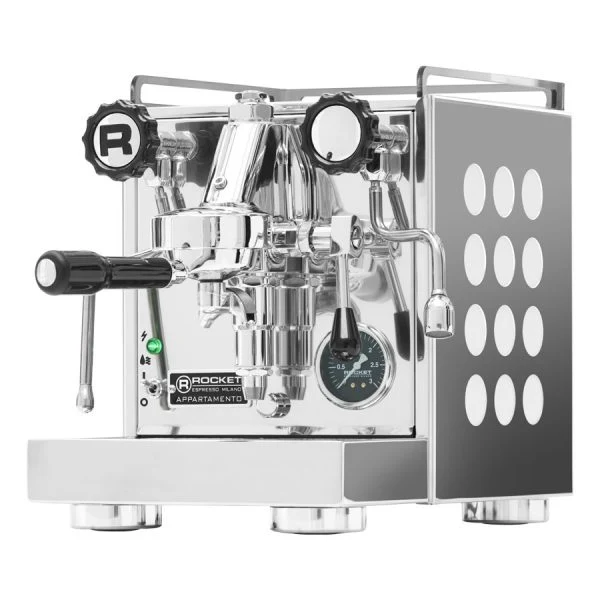
Manual espresso machines (Rocket, Rancilio) need a grinder capable of a genuinely fine, consistent grind with enough adjustment range to dial in dose and extraction time precisely. Bean-to-cup machines (Jura) often have an integrated grinder already tuned to the machine, so a standalone grinder matters less unless you’re chasing more control than the built-in unit offers.
Integrated grinders versus standalone units
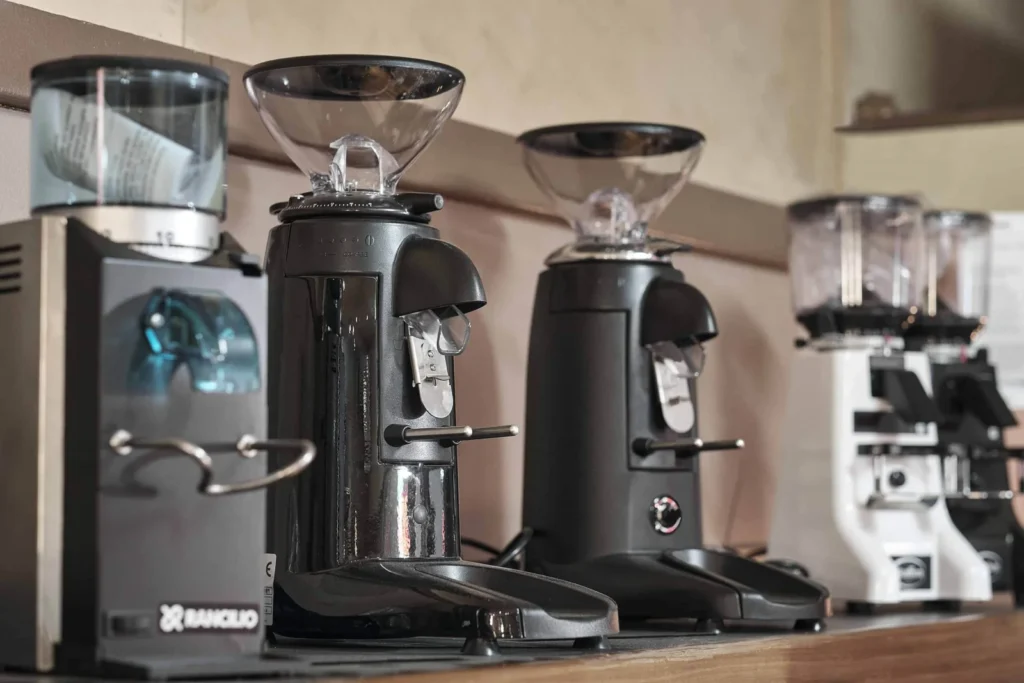
It’s worth being clear on the difference before shopping. An integrated grinder — built into a bean-to-cup machine — is tuned by the manufacturer specifically for that machine’s brew unit, which is exactly why most bean-to-cup owners never think about the grinder separately. A standalone grinder sits outside the machine entirely and feeds ground coffee into a portafilter by hand, which is the only real option for manual machines and also an upgrade path some bean-to-cup owners eventually explore if they want finer control than the built-in unit provides. If you’re comparing the two, the honest trade-off is convenience versus control — the integrated unit wins on convenience, a good standalone grinder wins on precision.
Grind range and stepless vs. stepped adjustment
If you’re serious about dialling in espresso, look for stepless adjustment — the ability to make tiny changes rather than jumping between fixed settings. That precision is what lets you fix a shot that’s running too fast or too slow without overshooting into the next setting and overcorrecting. Stepped grinders can still work well, but the jump between settings can be frustratingly large right around the sweet spot for espresso specifically.
Dosing consistency matters as much as grind size
A grinder that dispenses a slightly different dose each time undoes consistent grind size — you end up compensating for the grinder rather than the coffee, adjusting your tamp or extraction time to fight dose variation instead of actually improving the shot. Worth asking about when comparing models in-store, and worth pairing with a small scale if you’re serious about consistency, since eyeballing dose is one of the easiest places for variation to creep in unnoticed.
Volumetric vs. weight-based dosing
Some grinders dose by a timed or volumetric measure (grind for X seconds), while others (or a scale paired with any grinder) dose by weight. Weight-based dosing is generally more accurate, since bean density can vary slightly batch to batch even at the same grind setting — a timed dose can end up delivering a slightly different weight of coffee depending on the beans, while a weight-based dose stays consistent regardless.
One machine, multiple brew methods?
If you’re grinding for espresso one day and a plunger or Aeropress the next, make sure the grinder’s range actually covers both ends — some grinders are tuned tightly around espresso and struggle at the coarse end, producing an inconsistent, sludgy grind for plunger or French press even if they’re excellent for espresso specifically.
Noise and where the grinder will actually live
If the grinder’s going on a kitchen bench near a bedroom, or you’re making coffee early before the rest of the house is up, noise level is worth checking in person rather than assuming from a spec sheet — flat burr grinders in particular can run louder than conical designs at a similar price point.
What Different Grinder Tiers Actually Get You
At the lower end of the burr grinder market, expect decent consistency but limited adjustment range and higher retention. Mid-range grinders typically add stepless adjustment and lower retention. At the top end, you’re paying for burr longevity, near-zero retention and very fine-grained control — genuinely useful if you’re chasing the last 10% of shot quality, but not essential for most home setups.
Knowing when it’s time to upgrade
A grinder doesn’t need replacing just because a newer model exists — it’s worth upgrading when the current one is genuinely limiting what your machine and beans can do. Signs worth paying attention to include a grind range that can’t reach fine enough for a new espresso machine, dose variation that’s making it hard to pull consistent shots no matter how carefully you tamp, or a stepped adjustment that keeps overshooting the sweet spot for a particular blend. If none of those apply and you’re just curious about a shinier model, the grinder you already have is probably still doing its job.
A simple way to think about budget split
If you’re building a manual espresso setup from scratch, it’s worth resisting the temptation to spend almost everything on the machine and treat the grinder as an afterthought. A genuinely good grinder paired with a modest machine will consistently outperform a top-tier machine paired with a mediocre grinder, because grind consistency affects every single shot in a way a machine’s finer features simply can’t compensate for. As a rough guide, treating the grinder as roughly equal in importance to the machine — rather than a smaller add-on purchase — leads to a noticeably better result for the same total spend.
What to tell us if you’re not sure what you have
Not everyone knows their machine’s exact model off the top of their head, and that’s fine — a photo of the machine, or even just the brand and roughly when you bought it, is usually enough for us to narrow down what grinder range and adjustment style will actually suit it. Bringing the machine’s manual, if you still have it, helps too, but isn’t essential — most of what we need to know is visible on the machine itself.
Bring your machine details in (or just tell us what you’ve got) and we’ll help you land on the right grinder rather than leave you working through spec sheets alone.
Do I need a separate grinder if I have a bean-to-cup machine?
Usually not — bean-to-cup machines like the Jura E6 have an integrated grinder tuned to the machine. A standalone grinder matters most for manual espresso machines.
What’s the difference between burr and blade grinders?
See our full burr vs. blade grinder guide — the short version is consistency, which matters most for espresso.
Can you help me match a grinder to my machine in-store?
Yes — bring in (or tell us) your machine and we’ll talk through what suits it and your coffee habits.
Is weight-based dosing worth it over a timed/volumetric grinder?
Generally yes, if consistency matters to you — bean density can vary slightly, so a timed dose can produce a slightly different weight shot to shot, while weight-based dosing stays consistent.
Will a grinder built for espresso also work for plunger or French press?
Depends on the model — some are tuned tightly for the fine end and struggle at coarser settings. Worth checking the full grind range if you brew more than one way.
How do I know when it’s actually time to upgrade my grinder?
When it’s genuinely limiting your machine — can’t grind fine enough, dose varies too much to pull consistent shots, or adjustment keeps overshooting the sweet spot. Wanting a newer model isn’t the same as needing one.