Burr vs. Blade Grinders: What Actually Matters for Your Coffee
If you’ve bought good beans and a good machine but your coffee still isn’t right, the grinder is the most likely culprit — and the difference between burr and blade isn’t a minor spec, it’s the whole game.
Blade grinders: uneven by design
Blade grinders chop beans with a spinning blade, like a mini food processor. It’s fast and inexpensive, but it produces an uneven mix of fine dust and larger chunks in the same batch, because the blade just cuts whatever bean happens to be in its path at that instant rather than sizing every particle consistently. For espresso in particular, that inconsistency shows up directly in the cup — some particles over-extract (bitter), others under-extract (sour), at the same time, in the same shot, which is why blade-ground espresso often tastes muddled no matter how good the beans are.
Burr grinders: consistency you can taste
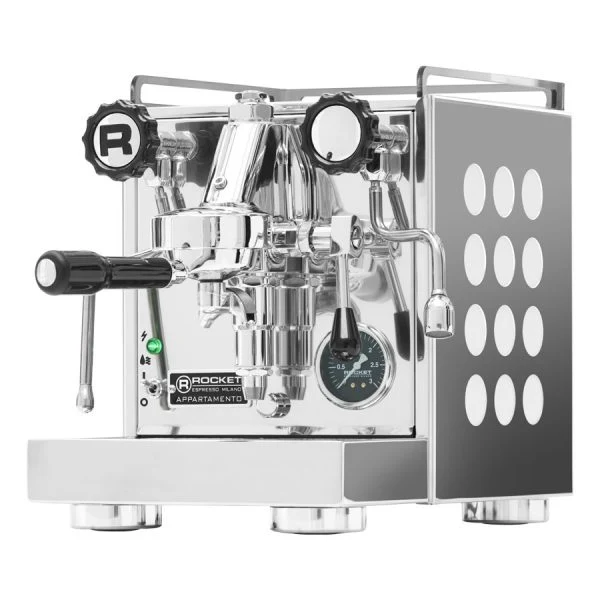
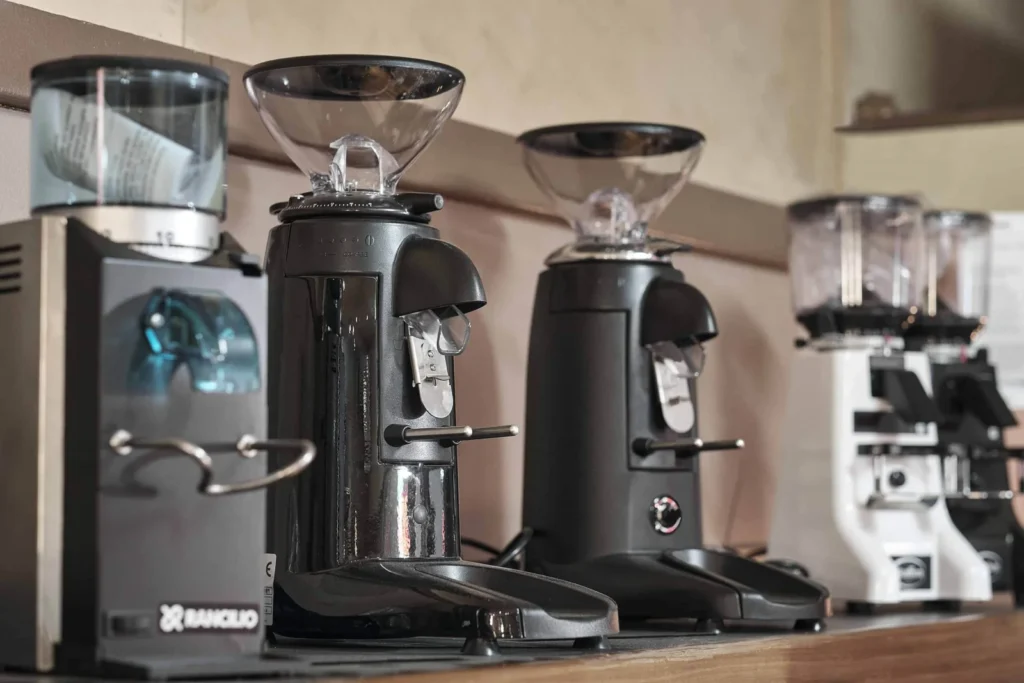
Burr grinders crush beans between two revolving surfaces — either flat or conical — producing a much more uniform particle size, and crucially, one you can adjust precisely for your brew method. That consistency is why every espresso machine we stock is paired with a burr grinder recommendation, never a blade grinder. When particle size is even, extraction is even, and the flavour in the cup reflects the bean rather than a grind-related fault.
Flat burrs vs conical burrs
Within burr grinders, flat burrs (like those in the Stone Pebble) tend to produce an especially even, consistent grind and are a popular choice specifically for espresso. Conical burrs run a little quieter and tend to retain slightly less ground coffee between uses, which matters if you’re grinding small single-serve doses rather than a large hopper’s worth at a time. Neither is universally “better” — it depends on what you’re brewing and how particular you are about retention and noise.
Does grind size really matter that much?
Yes — espresso needs a fine, consistent grind to build the right resistance for extraction; a French press needs a coarse, consistent grind so it doesn’t turn to sludge or leave excessive sediment in the cup; filter and pour-over sit somewhere in between depending on the specific method. A blade grinder can’t reliably give you any of these consistently, because it has no way to target a specific particle size — you get roughly the right average size mixed with a lot of noise around it.
What a bad grind actually tastes like
If you’ve ever had espresso that tastes bitter and sour at the same time — burnt on top, sharp underneath — that’s very often a grind consistency problem, not a bean or roast problem. The over-extracted fine particles and under-extracted coarse chunks are both hitting your palate in the same sip, and no amount of adjusting the machine will fully fix it if the grind itself is inconsistent.
Cleaning and maintaining a burr grinder
Burrs don’t need daily attention, but they do need occasional care to keep performing the way they did on day one. Ground coffee leaves behind fine oily residue that builds up on the burrs and in the chute over weeks of use, gradually dulling grind consistency in a way that’s easy to mistake for the burrs simply wearing out. A basic grinder-cleaning satchel run through periodically clears that residue without needing to strip the machine down. It’s also worth occasionally checking the hopper and chute for stray grounds building up in corners, since that trapped coffee goes stale and can taint fresher beans passing through afterwards.
Signs your burrs are actually wearing out
Burrs are a wear item, not a lifetime part — how quickly they wear depends on how much you grind and what you grind it for. A genuine sign of worn burrs is needing to grind progressively finer over time just to hit the same extraction time you used to get at a coarser setting, or a grind that starts looking more like powder with visible larger chunks mixed through, rather than a uniform size. If cleaning doesn’t restore the grind quality and your setting has crept noticeably finer over months without you changing beans or machines, worn burrs are worth investigating before assuming the problem is somewhere else.
Retention and single dosing
Some grinders retain a small amount of ground coffee inside the chamber between uses — over time, that retained coffee can go stale and mix into your next dose. If you’re grinding fresh for every cup, look for a grinder with low retention or a genuine single-dosing design, rather than one built around a large hopper that sits half-full for days.
What Separates Entry-Level From Premium Grinders
Entry-level burr grinders cost more than blade grinders, and that gap is buying you motor quality, burr material, and adjustment precision — not just a marketing label. As you move up in price, you’re generally paying for finer-grained adjustment (useful for genuinely dialling in espresso), quieter operation, and lower retention, rather than a fundamentally different grinding method.
Why a blade grinder can’t just be “used more carefully”
A common assumption is that a careful, practised hand can get a decent grind out of a blade grinder by pulsing it just right. In reality, the fundamental problem isn’t technique — it’s that a spinning blade has no way to stop cutting a particle once it’s small enough, and no way to guarantee every bean gets an equal number of passes through the blade. Two beans sitting in slightly different positions in the chamber at the moment the blade spins will end up different sizes no matter how careful or experienced the person pulsing it is. It’s a limitation of the mechanism itself, not a skill gap, which is why upgrading technique on a blade grinder only ever gets you marginally better results rather than genuinely consistent ones.
Matching a grinder to your machine
See our guide to choosing a grinder for your machine for how to match grind range and dose to a specific espresso machine, or come and see (and hear) the difference for yourself in our grinder range — it’s a lot easier to explain over the counter than in a spec sheet, and we’re always happy to talk it through.
Is a burr grinder worth it if I already have a good machine?
Yes — a great machine paired with a blade grinder will still produce inconsistent shots. The grinder is usually the bigger upgrade if your coffee tastes off.
Are all burr grinders the same?
No — they vary in burr material, flat vs conical design, grind range and consistency at the fine end needed for espresso. Come in and we’ll match one to your machine.
Can I use a blade grinder for plunger/French press coffee?
It’s less critical than for espresso since the grind is coarser, but you’ll still get a more even extraction from a burr grinder.
What’s the difference between flat and conical burrs?
Flat burrs tend to produce an especially even grind favoured for espresso; conical burrs run quieter and typically retain less ground coffee — the right choice depends on your priorities.
Why does my espresso taste bitter and sour at the same time?
That’s a classic sign of an inconsistent grind — some particles are over-extracting while others under-extract in the same shot. A burr grinder largely solves this.
How do I know if my grinder’s burrs need replacing?
If you find yourself grinding progressively finer just to hit the same extraction time, or the grind looks uneven even after cleaning, worn burrs are worth checking.