Single Origin vs. Blends: Which Coffee Should You Buy?
It’s the first fork in the road for anyone buying beans, and there’s no universally “better” answer — just what suits the way you actually drink coffee. Here’s how we explain the difference to customers in our Pymble shop, without the jargon that usually comes with it.
What “single origin” actually means
Single origin coffee comes from one region, one harvest — nothing blended in to smooth it over. Our single origin range includes Kenya AA (floral, berry, wine-like), Ethiopian Yirgacheffe (citrus and spice, the birthplace of coffee), PNG Organic (bright acidity, sweet chocolate finish) and Colombia (fruity, cocoa-sweet, the easiest entry point). What you taste is genuinely what that region’s soil, altitude and processing produced — no other beans are softening it out. This also makes seasonal variations, bean varieties and processing methods more prominent.
It matters more than it sounds. Two farms a few hundred kilometres apart, at different altitudes, with different soil and processing methods, can produce coffee that tastes nothing alike even from the same country. That’s the whole appeal of single origin — you’re tasting a specific place, not an averaged-out approximation of “coffee.”
What a blend is built to do
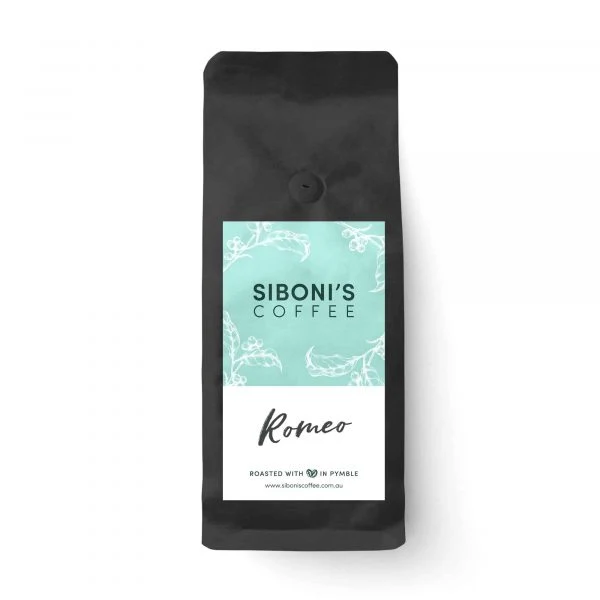
A blend combines beans from different origins and roast profiles into something more balanced and more consistent, cup after cup, than a single origin can be on its own. Our signature blends — Romeo, Valentino, Jungle, Dolce Vita, Millennium, CB, Ipanema Espresso RFA and Fifteen Candles — are built specifically for espresso and milk-based coffee, where consistency and body matter more than showcasing one region’s character.
Blending isn’t a lesser version of single origin — it’s a genuinely different craft, aimed at a different outcome. A well-built blend accounts for how beans behave together under pressure and heat, how they hold up against milk, and how consistent the result is across a hundred bags, not just the one you happened to taste in the shop. We hope you find our blends have the clarity and complexity for you to discover some of the notes you find in our single origins.
One thing that sets our blends apart: green-bean blending
Most roasters blend after roasting — mixing beans that were each roasted separately, sometimes weeks apart, sometimes from different roast batches with slightly different profiles. We blend the green (unroasted) beans first, then roast the combination as one batch. It’s more work — you can’t just adjust one origin’s roast time on its own once they’re mixed — but it means every bean in the bag has been roasted specifically as part of that blend, not roasted alone and then thrown together. The result is a more integrated flavour, and a blend that tastes the same whether it’s the first bag off a batch or the last.
Does it matter for the machine you own?
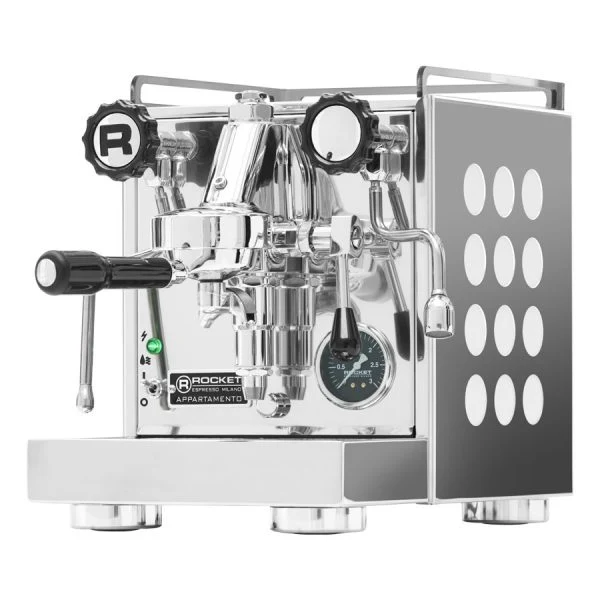
If you’re on a manual espresso machine — a Rocket or Rancilio — either single origin or blend will work, but the character comes through differently. A blend like Romeo is built to hold its shape through the pressure and heat of extraction and still taste balanced; a single origin will show you more of its specific personality, for better or worse depending on your palate. On a bean-to-cup machine like a Jura, blends are usually the safer, more forgiving choice, since the machine’s automated grind and extraction settings are tuned for consistency rather than nuance.
If you brew filter, plunger or pour-over rather than espresso, single origins genuinely shine — the brighter, more distinct flavours that can get lost under milk or espresso pressure come through clearly in a simpler brew method.
Common misconceptions worth clearing up
A lot of customers assume single origin automatically means “better” or more premium, and blends are somehow a compromise — that’s not how it works here. Some of our most awarded coffee is a blend (Romeo has picked up more medals than anything else in the range), and some single origins are genuinely difficult to drink black if you’re not used to bright, acidic coffee. “Better” is really just “better suited to how you drink it.”
Another common assumption is that single origin coffee is always more expensive because it’s rarer. In our range, single origin and blended beans sit in a similar bracket — pricing differences are usually about processing method and harvest availability, not some blanket rule that single origin costs more. And a genuinely common mix-up: single origin doesn’t mean single farm. Most single origin coffee — including ours — comes from a region or cooperative of farms, not one specific property, unless it’s specifically labelled as a microlot.
Roast level changes the comparison too
Roast level interacts with this whole decision more than people expect. A lighter roast on a single origin preserves more of that region’s specific acidity and fruit character — which is exactly why specialty single origins are often roasted lighter. A darker roast tends to flatten out origin character in favour of body and caramelised sweetness, which is part of why blends built for espresso often sit at a slightly darker roast than a filter-focused single origin. If you’ve tried a single origin before and found it “too sharp” or “too different,” it’s worth asking what roast level you tasted — the same bean roasted differently can taste like a different coffee entirely.
A quick way to decide, if you’re still not sure
Think about the last coffee you actually enjoyed and try to remember whether you drank it black or with milk, and whether it tasted “interesting” or just “solid and reliable.” If milk and reliable, start with a blend. If black and interesting, start with a single origin — and don’t be afraid to pick the more unusual-sounding one on the shelf, since that’s often exactly the point.
Price, and why it’s not really the deciding factor
Single origin and blended beans sit in a similar price range here, so cost isn’t usually what should drive the decision — taste and how you drink your coffee should. Where origin does affect price more is at the very top end (a limited microlot from a single farm, for instance), which isn’t typically what you’ll find on a general café or home shelf.
So which should you buy?
If you drink your coffee black, or you’re curious what a specific region actually tastes like, start with a single origin — Colombia if you want something smooth and forgiving, Kenya AA or Ethiopian Yirgacheffe if you want something distinctive and a little more challenging. If you drink mostly milk-based coffee (lattes, cappuccinos, flat whites) or you want a bag that tastes the same every time you reorder it, a blend — Romeo is our most-awarded and the easiest all-rounder — is the better starting point.
A lot of people end up keeping both in the cupboard: a blend for the everyday morning coffee with milk, and a single origin for weekends or when they’ve got time to slow down and actually taste it.
Honestly, the fastest way to decide is to come in, smell the roastery, and ask whoever’s behind the counter what they’d pick for your machine — it’s all about the beans, and we’d rather talk you through it than have you guess from a bag.
Can I taste before I decide?
Yes — visit our Pymble shop and we’ll talk you through what suits your machine and taste before you buy.
Is one better for espresso machines specifically?
Blends are generally built for espresso and milk-based drinks. Single origins work well as espresso too, but you’ll taste more of that region’s specific character rather than a rounded, consistent shot.
Do you have decaf in both?
Yes — Peru Decaf and Colombia Decaf are both single origin decaf options, and both under 1% caffeine.
Does single origin coffee cost more than a blend?
Not generally in our range — both sit in a similar price bracket. Cost isn’t usually the deciding factor; how you drink your coffee is.
Can I mix single origin and blends at home, or should I pick one?
Plenty of our customers keep both — a blend for everyday milk-based coffee, and a single origin for when they’ve got time to appreciate it black or through a filter method.
Does single origin always mean it came from one farm?
Not necessarily — most single origin coffee, ours included, comes from a region or cooperative of farms. A true single-farm microlot is a different, more specific thing.